

Mini Cooper S (R53): The Supercharged Labrador
There are cars that are fast. There are cars that are clever. And then there are cars that feel like they were engineered by someone who drank three espressos, shouted “SEND IT,” and bolted a supercharger onto a hatchback the size of a Labrador.
This is the Mini Cooper S (R53). It might just be one of the last properly unhinged small performance cars we’re ever going to get.

The Setup: BMW Buys MINI and Chooses Violence
Early 2000s. BMW owns MINI. They want retro charm but also credibility. After a long argument with Rover over body shape, suspension and engine direction, the Bavarians won. The conglomerate came to a ‘compromise’ and went with BMW’s preferred direction.
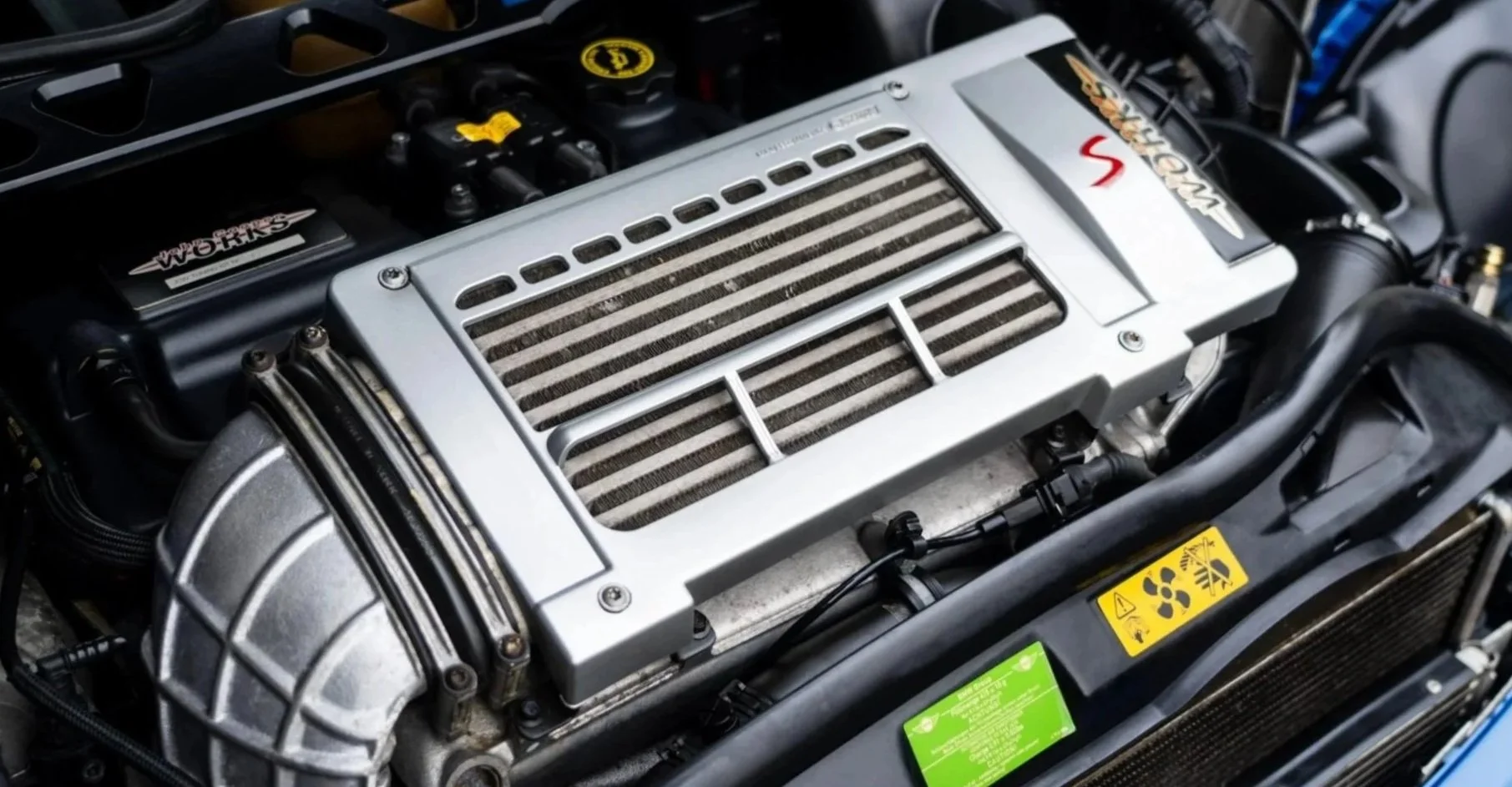
Instead of giving it a polite turbo like every other manufacturer would eventually do, they strap an Eaton M45 supercharger to a 1.6-litre Tritec engine and say, “That’ll do.”
It makes 163 bhp in early form. Post-Facelift cars got 170 bhp, and a few “tonal adjustments” through mapping. This was coupled with a shorter ratio gearbox (read: faster acceleration) and an optional limited-slip differential (read: better stability and grip). 0-60 mph was achieved in about seven seconds.
That doesn’t sound like much. Until you realise the car weighs roughly the same as a modern hot hatch’s infotainment system and sticks to the road like a Gecko wading through superglue.
The Noise. Oh My Word, The Noise.
Turbo cars woosh. The R53 screams. Not a refined, filtered, scream. Or an engine note designed by Hans Zimmer himself (I’m looking at you BMW i4). A mechanical, belt-driven, slightly deranged whine that rises with revs like it’s summoning something unpleasant from beneath the bonnet. It’s a joyous cacophony of tightly squeezed air being mechanically bludgeoned into four cylinders with a playful exhaust note finisher.
Floor it in second.
4,000 rpm.
And suddenly the car sounds like an angry Dyson attempting motorsport.
It’s glorious.
It’s completely unnecessary.
If you’ve driven a supercharged car, you already know. There’s nothing quite like that belt-driven urgency and the noise that comes with it.
It’s about the driving experience.. Remember that?
A lot of cars, even in the performance hatch segment, are wildly sanitised. Bulbous. Weighty. Tame.
The R53, at the risk of sounding like the old man in the corner of a pub regaling tales of “back in my day”, was made in a different time.
To start, the first thing you pick up on is the hydraulic steering, connecting you viscerally to the front wheels. Not a ‘digitally interpreted’ opinion about grip. Actual hydraulic steering.
You feel cambers. You feel surface changes. You feel that slightly naughty tug (not that one, the other one) when the diff and torque steer start arm wrestling.
The R53 hands you a raw experience, gives you power you can actually use, and a chassis that responds to inputs and communicates the road. Really, the car is just telling you to “Deal with it.” And you do. Because it’s addictive.
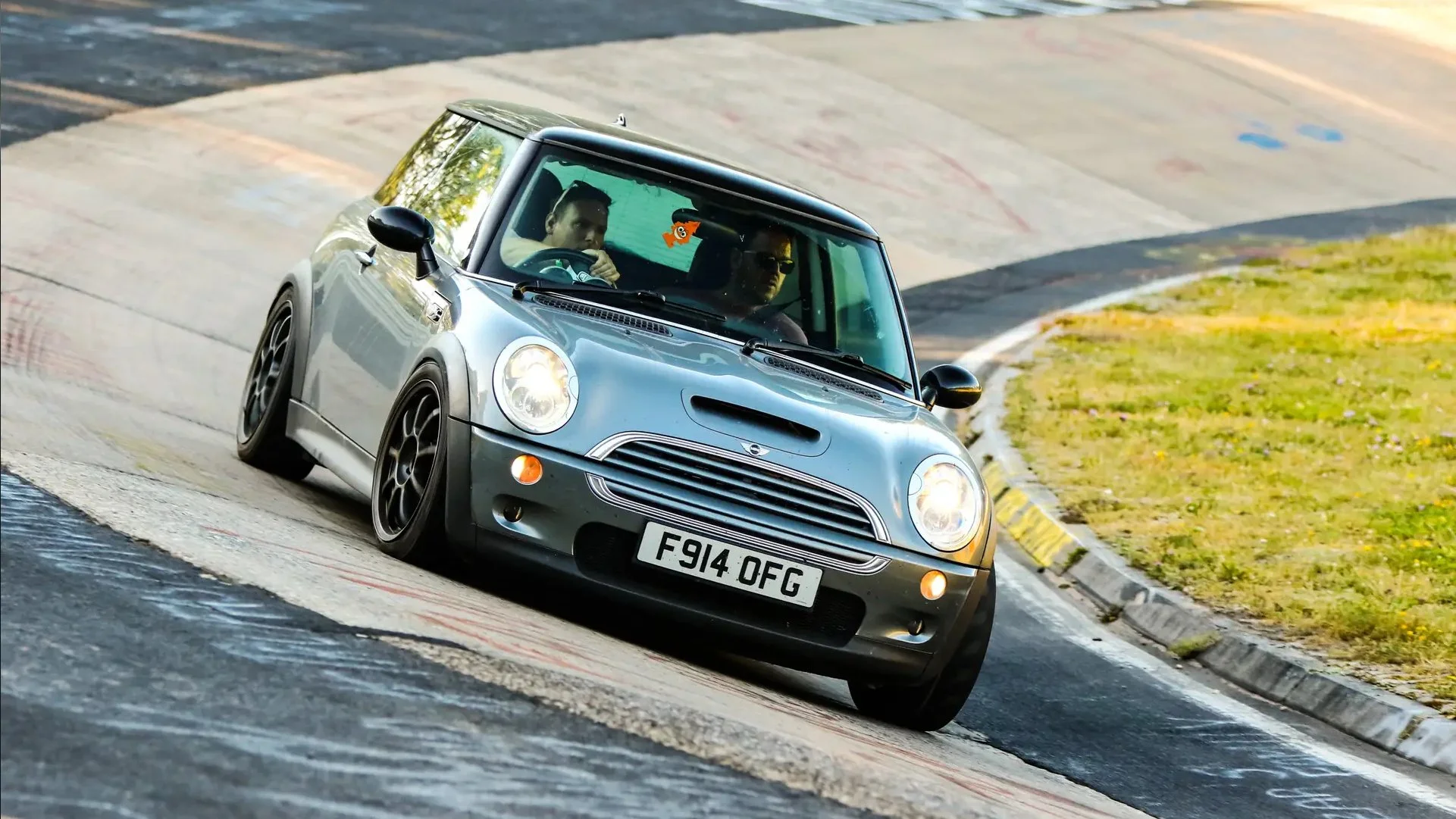
It doesn't ride like a Rolls-Royce; you can feel the road. The front end bites hard. Almost too hard. Trail brake into a corner and the rear gets light. Lift mid-corner and it rotates just enough to make you feel talented. Or nervous. Or both.
It doesn’t feel sanitised. It feels… eager. Like it’s constantly one decision away from either ‘hero status’ or ‘calling a tow truck’.
Finding a tight, undulating B-road in this car just turns to bliss. Second gear. Third gear. Lots of steering input. The car dances. It chatters. It pulls. It whines. You’re working. It’s working.
When you get it right, it feels like you’ve accomplished something; not like the ECU did it for you.
It’s a disappointing fact that modern hot hatches isolate you from raw driving experiences. They mollycoddle you. They insist on digital infotainment, multi-faceted driving modes with adaptive sprung mumbo-jumbo and push ridiculous torque and horsepower numbers that you can't actually deploy.
The sense of involvement is disappearing. Which is why cars like this are quietly becoming important.
The Flaws (Because We’re Not Blind)
This is where ‘Modern Classic’ territory gets real. Power steering pumps have a habit of auditioning for early retirement, often at the most inconvenient moment possible. Supercharger bearings, if neglected, can turn that glorious whine into expensive background music. Rust has started nibbling at bodywork (particularly around the rear light clusters and arches) and timing chain tensioners are not immortal, despite what previous owners might claim.
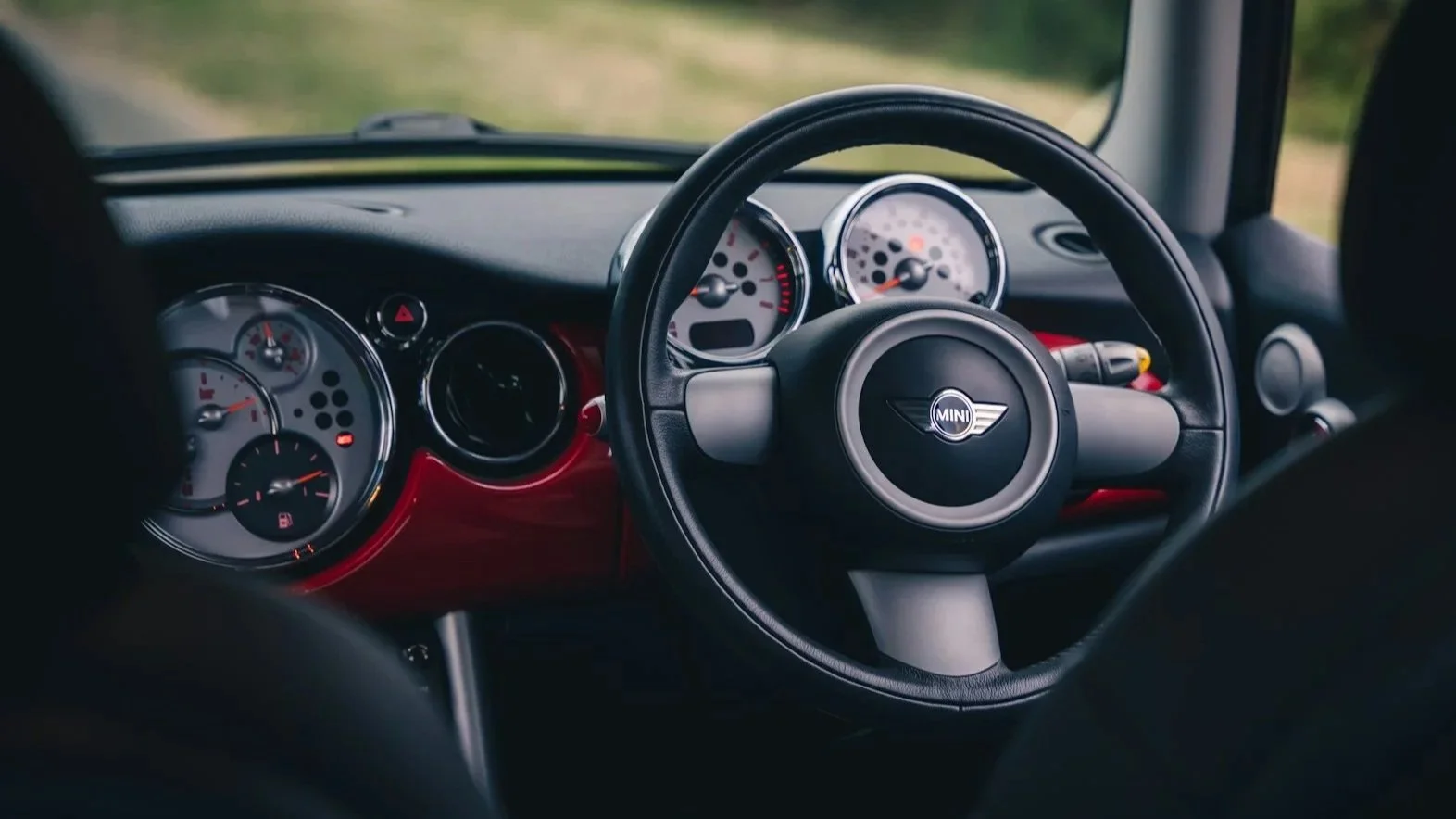
Inside, you’re greeted by peak early-2000s silver plastic optimism. It’s charming, but only if you remember flip phones fondly.
And then there’s the modification era. A large percentage of surviving cars were “tastefully enhanced” by someone named Callum in 2009. Lowering springs of mysterious origin, wheel fitment that ignores geometry entirely, and exhaust systems that suggest subtlety was never consulted. Finding a clean, well-maintained example now requires patience, and possibly counselling, but it is doable.
The upside? They’re not particularly difficult to work on, and thanks to the slightly grim reality that breaking one often yields more profit than selling it whole, parts are plentiful. OEM or otherwise.
Why It Matters Now
The R53 sits in a sweet spot.
It’s small. Supercharged. Manual. Pre-overweight era. It represents a time when hot hatches were allowed to be slightly daft. Today’s equivalent is faster. Safer. More capable. But it won’t feel like a caffeinated terrier dragging you toward the apex. The R53 will.
Prices now are nearly at rock bottom. Breaking a car for parts is significantly more profitable than selling a “ropey” example. But there is going to be a boom - this car is reaching the point where kids are going to want “dad’s old fun car”. Prices will rise and it’s only a matter of time before they are far rarer, and more greatly appreciated.
I don’t necessarily advocate buying a cheap example, unless you’re handy with a socket set, but a project R53 may be a good toy to keep hold of over the next few years.
The R53 is not the fastest small car you can buy. It’s not even the most reliable. But it might be one of the last small performance cars that feels slightly feral.
And in a world of polite turbocharged efficiency, maybe we need more cars built by someone who’d had three espressos and absolutely no interest in calming down.
That’s worth preserving.
